How Amazon Influencers Can Find Products Before They Go Viral
How to find products before they go viral and use early trend signals to discover promising products before competition grows

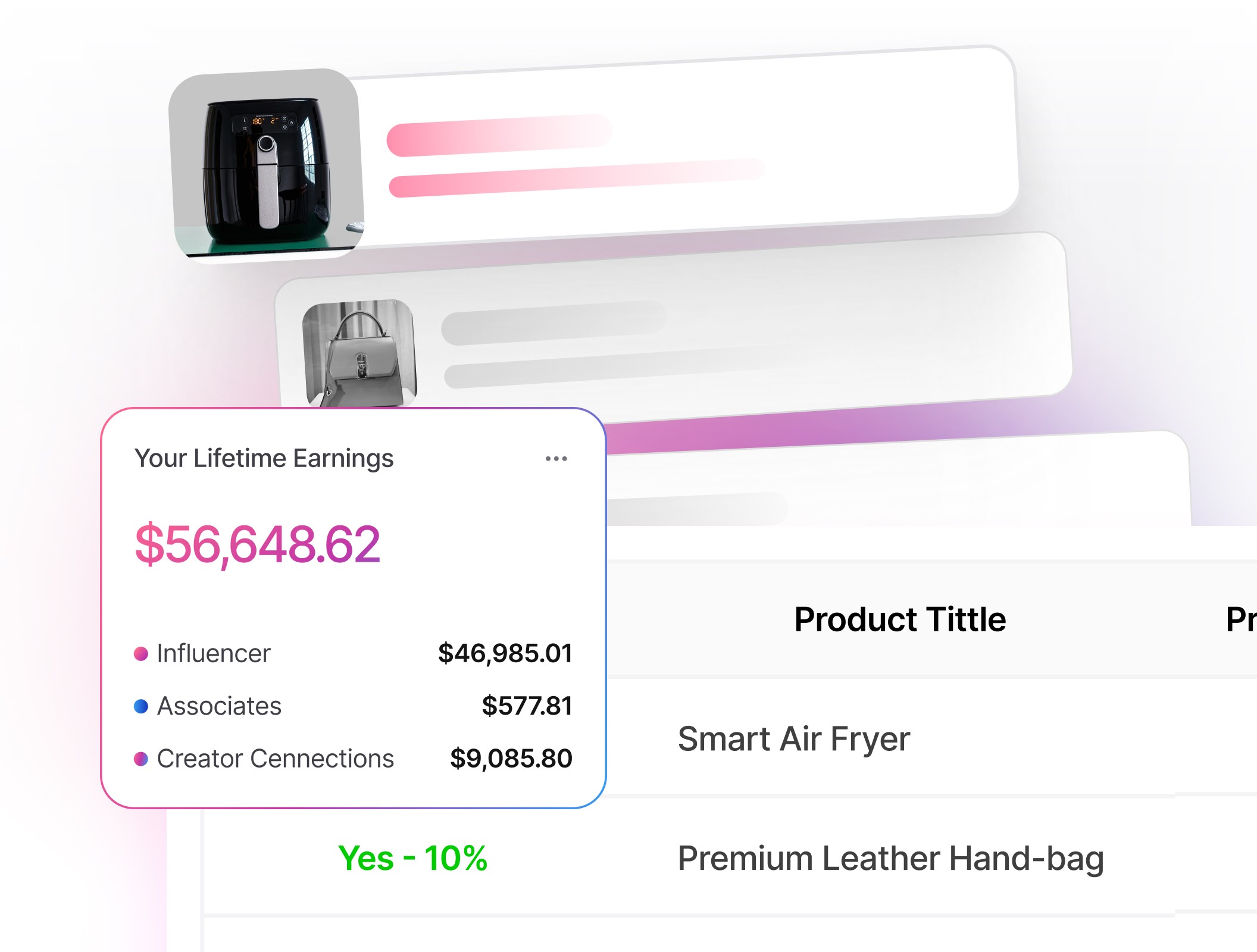
Spotting promising products before they get saturated gives you more room to capture attention, test content, and build trust with your audience. Viral Vue helps you research products by surfacing sales, creator competition, and earnings data, so you can make more informed decisions about which products are worth creating videos for.
This guide shows you how to read Amazon’s own data, pair it with search and social trend tools, and test ideas in days. You will learn about what to watch, how to decide quickly, and how to stay compliant while you promote.

TL;DR
Track early demand signals on Amazon and social platforms, not hype or headlines.
Watch Amazon sales-rank movement, New Releases, pricing, recent revenue, and creator competition for signs that a product deserves a closer look.
Validate with Google Trends and TikTok Creative Center, then run small content tests.
Keep a daily dashboard and a 48-hour workflow so you can act before trends peak.
Disclose affiliate relationships clearly to meet FTC and Amazon Associates rules.
What "Before They Go Viral" Really Means
Visible virality is often a later-stage signal. By the time a product appears everywhere, more creators may already be competing for the same audience and product placements. The opportunity is to find products showing meaningful demand before creator competition becomes crowded. Look for fast relative growth, not big absolute numbers.
Think in niches, not global hits. A hair tool that surges in textured-hair subreddits or a compact kitchen gadget trending among small-apartment renters can deliver outsized results for an influencer whose audience overlaps those pockets.
Read Amazon’s Native Signals Like a Pro
Amazon provides useful marketplace clues, but no single metric predicts a breakout. Look at several signals together, including rank movement, recent revenue, creator competition, pricing, and commission potential. Use early demand and competition signals to spot emerging products before everyone else instead of waiting until a product is already saturated.
With Viral Vue’s Amazon extension, you can see data such as 30-Day Sales, Total Influencer Videos, Viral Score, and Creator Connections while browsing Amazon search results. That gives you more context to decide whether a product has enough sales activity and opportunity to justify creating a video.
Best Sellers Rank and New Releases
Best Sellers Rank (BSR) reflects a product’s relative sales performance within an Amazon category. A lower rank generally indicates stronger sales relative to other products in that category. Before chasing early momentum, it helps to understand trending products vs best-selling products and what each signal actually tells you.
Watch for improving rank alongside other signals such as recent revenue, review count, and creator competition rather than treating BSR as a stand-alone sales measure. Amazon’s New Releases pages also surface items gaining traction soon after launch, which is fertile ground for early coverage.
Movers and Shakers and Seasonal Lists
Movers and Shakers change fast and reflect big rank jumps in the last day or so. Treat it like radar, then click through to confirm the lift is tied to real demand, not just a lightning deal.
Cross-check with seasonal lists and calendar moments. A product rising off-season is often a stronger underlying signal than a lift tied to an obvious holiday.
Storefront Clues That Predict Breakouts
Treat listing changes as supporting clues, not proof of product demand. A newer product with improving performance, relatively few reviews, stable pricing, or changing availability may deserve more research, but each signal can have several explanations.
Before creating a video, use Viral Vue’s recent revenue and influencer-video data to add context to those listing clues. Then decide whether the product’s sales activity and level of creator competition make it worth testing with your audience.
Look Beyond Amazon to Spot Demand Forming
True commercial spikes often begin in search feeds and social discussions long before hitting mainstream retail charts. Marketplace data becomes more useful when you compare it with signals outside Amazon. Search and social trends can help show whether interest in the problem, category, or use case is spreading beyond a single listing.
Search and Social Trend Data
Google Trends shows relative search interest over time and by location. If your audience is primarily U.S.-based, filter to the United States and compare the product name with broader problem or use-case searches. Treat rising search interest as supporting evidence, not proof of sales or purchase intent.
Use TikTok Creative Center to study trending hashtags, related videos, popular creative patterns, and product inspiration that overlap with your niche. When a use case or audio trend aligns with your niche, you can ride the wave with timely content that points to the product you found on Amazon.
Communities and Crowdfunding
Scroll communities where problems surface first: specialized subreddits, Discord groups, Pinterest boards, and niche Facebook groups. Crowdfunding platforms can surface emerging product concepts and show which features resonate with early adopters.
Use those ideas as research signals. Then, look for established Amazon products solving the same problem rather than assuming a crowdfunding trend will reach mainstream retail.
Build a Lightweight System So You Are Early
A streamlined routine prevents burnout while keeping your product pipeline ahead of the curve. A repeatable research routine keeps promising products from getting buried in dozens of open tabs and one-off searches.
Instead of researching manually, you can use Viral Vue's Product Vue, which brings products into one sortable view and helps you compare sales, competition, commission, and other research data in one place. Use those comparisons to narrow your shortlist before investing time in product videos.
Your Daily 15-Minute Dashboard
Check these in order:
Scan the Amazon categories and keywords you cover for promising products.
Use Viral Vue to compare recent revenue, Viral Score, influencer-video competition, commissions, and Creator Connections opportunities across your shortlist.
Check Google Trends for matching product, problem, and use-case searches.
Review TikTok Creative Center for relevant creative and audience signals.
Prioritize products where the sales data and competition level support further research or a video test.

A 48-Hour Test Workflow
A short testing window can give you early evidence about which product or content angle deserves more attention.
Day 1 morning: Shortlist two products using Amazon signals and Viral Vue data such as recent revenue and creator competition, then check whether off-Amazon interest supports the opportunity.
Day 1 afternoon: Create a quick vertical video for each product, focusing on one clear use case and include an appropriate affiliate disclosure.
Day 2: Post a comparison or use-case variation for the better performer, add a simple promo hook (bundle idea, tip), and update your Amazon Storefront.
End of day 2: Keep the winner, park the laggard, and repeat.
Top Early Signals Worth Your Attention
Filtering noise from high-value metrics saves creators hours of guesswork every single week.
Signal Source | What It Tells You | Strengths | Watch-outs |
Amazon Best Sellers Rank | Relative sales momentum by category | Fast, directional; good for shortlisting | Category changes and deals can skew rank |
Amazon New Releases | Early traction on recent listings | Great for finding fresh items | Some launches are deal-driven, not sticky |
TikTok Creative Center | Rising hashtags, sounds, and formats | Real-time creative angles to match | Trends can be fleeting and country-specific |
Google Trends | Search interest over time and region | Validates problem-solution demand | Brand terms may lag generic searches |
Price/Stock Trackers | Velocity hints via price and availability | Confirms organic vs promo-driven lift | Data can be noisy without enough history |
Viral Vue | Recent revenue, creator competition, commission opportunities, and product potential | Helps compare products before deciding what to research or create videos for | Treat scores and estimates as decision aids, not guarantees |
Create Content That Travels
Lead with use cases, not features. Show the product solving a specific problem quickly, then give viewers enough context to understand why it matters. Pair one strong benefit with one specific audience. Close with a natural call to action and a transparent affiliate disclosure.
Repurpose fast. Trim the hero clip for Shorts and Reels, then expand to a 60-second walkthrough. Add your Amazon Storefront Idea List at the end of each caption so wins compound.
After publishing, review Viral Vue’s performance data to see which products and videos are generating stronger results. Use those results to guide which product categories, opportunities, or video ideas you research next.
Stay Compliant While You Move Fast
Include clear and conspicuous disclosures on any post that includes affiliate links or material connections. The FTC expects disclosures that users can notice and understand, and notes that built-in platform tools alone may not be enough.
Amazon Associates also requires that you identify yourself as an Amazon Associate and follow its program policies. Place a clear affiliate disclosure close to the recommendation or link so readers can easily understand your financial relationship.
Amazon Associates should also use Amazon’s required Associate identification language and follow the program’s current disclosure rules.
Examples
These examples show how several early signals could come together during product research.
Low-Review Kitchen Gadget Finds Its Moment
A silicone sink squeegee shows a sharp BSR improvement in Kitchen, holds price, and adds two color variants in a week. Google Trends shows a climb in searches for small apartment cleaning hacks. TikTok Creative Center reveals a fast-rising audio tied to renter-friendly upgrades.
You post a 14-second clip showing three places the tool saves time and link to your Amazon list. The video outperforms your baseline CTR, and the item becomes a regular in your weekly picks.
Dorm Move-In Microtrend
Two weeks before college move-in, you notice a compact surge protector with rotating outlets rising on New Releases in Tools & Home Improvement. Google Trends confirms a spike for dorm power strip.
You film a desk setup swap with a side-by-side of the old strip vs the rotator, add a caption checklist for dorm safety, and pin it to your storefront. Let the post run through the seasonal window, then sunset it as interest fades and roll the learnings into your fall small-space series.
Actionable Steps / Checklist
Following an organized checklist keeps your daily growth strategy structured, accountable, and steady.
Pick 2 to 3 Amazon categories to own and bookmark their New Releases and Movers and Shakers pages.
Keep a shortlist of products and compare sales activity, creator competition, commission opportunities, and your own test results using Viral Vue’s Product Vue or Product Research tools.
Check Google Trends and TikTok Creative Center daily for matching demand and creative angles.
Ship two quick tests within 24 hours when signals align. Scale the winner on day 2.
Use short, clear disclosures on every post with affiliate links. Keep your Associates ID language handy.
Refresh your Amazon storefront weekly with Idea Lists for each microtrend.
Archive duds. Keep a swipe file of intros and hooks that convert in your niche.

Glossary
Mastering key e-commerce terms builds absolute confidence when analyzing market metrics and running affiliate campaigns.
Best Sellers Rank (BSR): Amazon’s relative sales rank within a category; lower means higher recent sales.
New Releases: Amazon lists showcasing items gaining traction soon after launch.
Conversion Rate (CVR): The percentage of viewers or clicks that result in a purchase.
Click-Through Rate (CTR): The share of people who click your link after seeing your content.
Trend Validation: Cross-checking Amazon signals with search and social data to reduce false positives.
Idea List: A curated list on your Amazon Storefront that groups related picks for quick browsing.
Material Connection: Any financial, employment, or family tie to a brand or product that the FTC expects you to disclose.
FAQ
Q: How often should I check for new products?
A: Daily for 10 to 15 minutes. Momentum shifts fast, and small windows compound if you act quickly.
Q: Do I need promo codes to make a product pop?
A: No. A promo code can influence conversion, but you can still test demand by comparing how audiences respond to the product, use case, and content angle
Q: What is the fastest way to test a product idea?
A: The fastest way to test a product idea is to post a 10- to 20-second vertical video that solves one concrete problem. Then, compare CTR and saves against your baseline.
Q: How do I avoid fads that die in a week?
A: Look for several signals pointing in the same direction, including sustained marketplace demand, manageable creator competition, broader search interest, and a product that solves a repeatable problem. In Viral Vue, compare recent revenue with Total Influencer Videos to understand both sales activity and creator competition.
Q: What disclosures do I need?
A: Use plain, prominent disclosures like Ad or Paid link, and include the Amazon Associates identification language as required by the program and the FTC.
Final Thoughts
Finding products early is less about predicting the next viral hit and more about recognizing several promising signals before the market becomes crowded. Start with marketplace demand and creator competition, validate the opportunity with search and social data, then let your own performance determine what deserves more attention.
Build the habit, keep disclosures clean, and let your storefront reflect what you're learning in real time. Viral Vue brings sales, creator competition, Creator Connections, and commission data into one product-research workflow.
That context can help you make more informed decisions about which products are worth researching further and which ones are worth making videos for.


Stop Guessing What to Post Next
Join TikTok Affiliates turning views into consistent commissions.