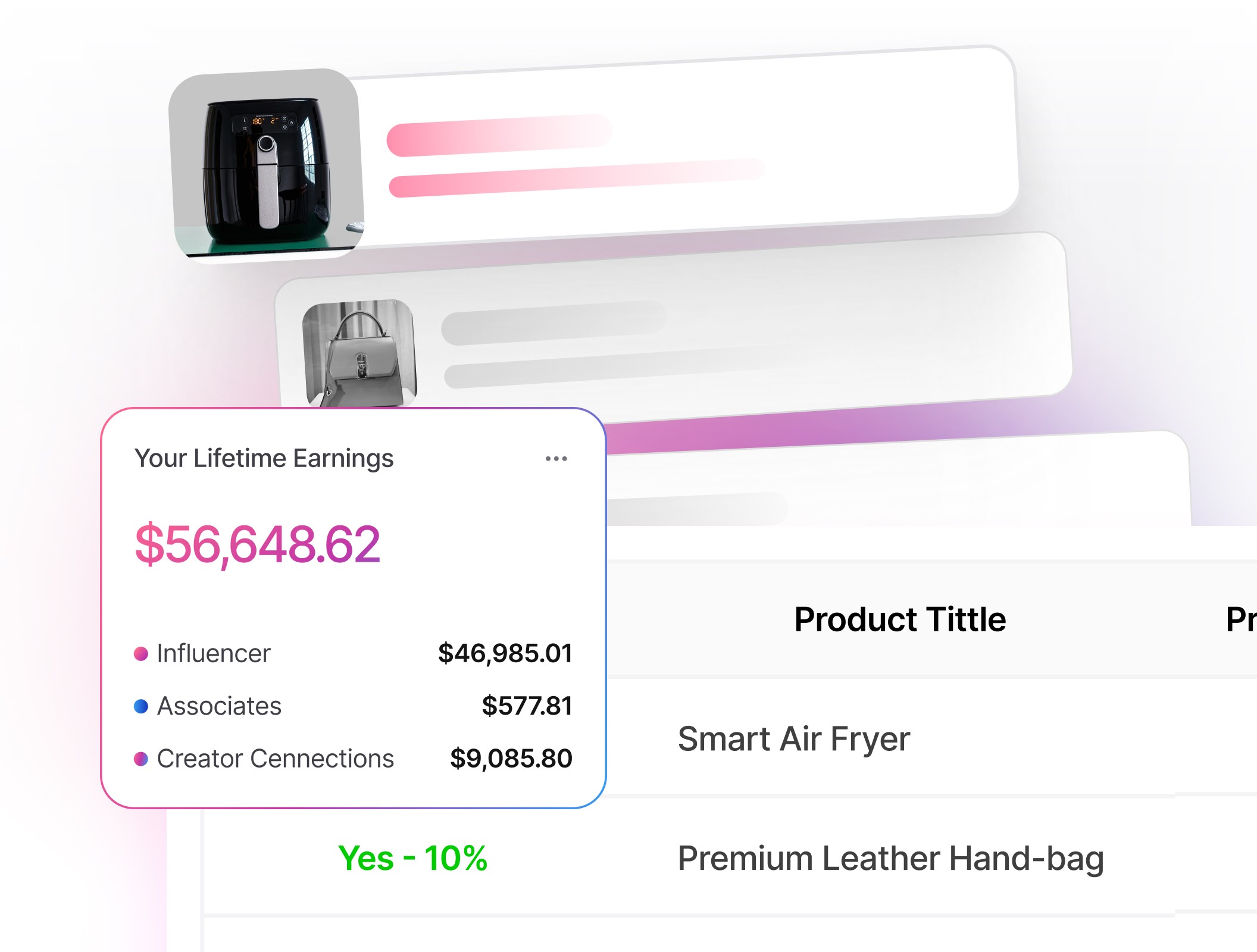
How to Know If a Product Is Worth Making an Amazon Influencer Video About
How to know if a product is worth making a video about and evaluate demand, competition, relevance, and earning potential before filming.

If you create shoppable videos on Amazon, your time is your most valuable asset. Not every product deserves a slot in your filming queue. Pick well, and your video can keep earning when Amazon surfaces it to shoppers. Pick poorly, and you can spend hours creating content with little earning potential.
This guide gives you a simple, field-tested way to judge if a product is worth your next Amazon Influencer video. You will learn what Amazon values, how to estimate earning potential, and how to make fast, confident go/no-go calls without paid tools.
You can complete these product checks yourself or use Viral Vue to speed up the research. Viral Vue surfaces demand, video competition, placement, and earning-potential data so you can decide what is worth filming.

TL;DR
Favor products with clear problem-solution stories, visible results, and simple demos that can be done in 1-3 minutes.
Look for signs of demand on the product page and category lists. Avoid items with unstable stock or lots of return complaints.
Estimate earning potential from category commission rate, price point, and typical conversion, then compare it to your filming time.
Use a quick scorecard to decide in under 10 minutes, then batch-shoot clear, helpful videos.
Understand What Amazon Wants From Influencer Videos
Amazon’s Influencer Program is part of the Associates Program. You earn commission on qualifying purchases when your content helps customers on Amazon or drives them there. Before filming, make product decisions using real signals instead of instinct whenever the data is available.
Your videos can appear on product detail pages and other Amazon placements. Amazon decides which eligible videos appear on product pages and how long those placements remain. Helpful content improves the shopper experience, but placement is never guaranteed.
A Practical Scoring Framework
Use five factors to evaluate a product quickly: Demand, Earning Potential, Demonstrability, Competition and Differentiation, and Stability.
1) Demand: Will Shoppers Care Today?
You don't need exact search volume to gauge product demand. On the product page, scan for:
Steady review velocity and recent Q&A activity.
A competitive but not chaotic review count. Extreme review inflation can signal returns or fads.
Category lists like Best Sellers or Movers & Shakers where similar items are climbing.
Seasonality matters, but don't automatically reject an off-season product. Filming ahead of a predictable demand spike can give your content time to be ready when shoppers return.
2) Earning Potential: Is It Worth Your Filming Time?
For onsite videos, estimate earning potential using Amazon’s current onsite commission rate, product price, shopper demand, and placement opportunity. Onsite commission rates are separate from standard Associates rates, so check the current onsite schedule before prioritizing a product.
Higher ticket prices help, but only when paired with real buyer intent and a video that answers the last-mile question. When in doubt, favor mid-priced, everyday items that convert reliably over luxury outliers that rarely move.
Keep onsite video attribution separate from standard affiliate-link attribution. Amazon applies different qualification rules to onsite content and traffic sent through Special Links. Review the official definitions so your expectations match reality.
3) Demonstrability: Can You Clearly Demo How It Works?
Great Amazon videos solve a shopper’s last hurdle: What does it look like, how big is it, and does it actually work? Show how the product works as clearly and quickly as possible.
Products that shine:
Have a clear setup and payoff you can show in one take.
Produce visible results or sound that proves performance.
4) Competition and Differentiation: Is There Room for Your Video?
Check how many influencer videos already cover the product and what they cover. Then decide whether you can answer a shopper question they leave unresolved. Consider:
A specific use case, fit check, or space constraint that buyers worry about.
A side-by-side with the closest competitor at the same price.
A simple tip that improves results, maintenance, or storage.
Before you film, enter the ASIN into Viral Vue to review Total Influencer Videos and current video placement. Use that data to judge whether your video has room to add something useful for shoppers. Competition should be part of every go/no-go decision, especially if you want to avoid products with excessive creator competition.
5) Stability: Is This Product Likely to Stay Relevant?
Evergreen products can offer longer earning windows, while seasonal and trending products can still be worthwhile when timing and demand are strong. Scan recent reviews for recurring complaints about failures, inaccurate sizing, difficult setup, or unmet expectations.
These patterns can reveal customer-satisfaction problems, but reviews don't show the product’s actual return rate. Favor items with stable stock and model continuity. For consumables, clearly explain the flavor, size, quantity, or variation you tested so shoppers know exactly what your experience applies to.

The One-Minute Go/No-Go Scorecard
Use the scorecard as a prioritization tool, not a rigid formula. One major weakness may justify skipping a product, while smaller drawbacks can sometimes be offset by strong demand or earning potential. Before making a final go-or-no-go decision, check the most useful product research metrics rather than relying on one signal.
Criterion | What To Look For | Quick Pass/Fail |
Demand | Recent reviews/Q&A; similar items in Best Sellers | Pass if activity is current and steady |
Earning Potential | Onsite rate + price + demand | Pass if likely earnings beat your hourly target |
Demonstrability | Clear problem-solution demo | Pass if you can storyboard 3 shots now |
Competition & Differentiation | Video saturation + a useful angle | Pass if you can name your hook in one line |
Stability | Stable stock; recurring quality issues | Product appears stable with few recurring complaints |
If several products pass your initial scorecard, use Viral Vue to compare the shortlist more efficiently.
Product Vue shows estimated 30-day sales, influencer-video competition, placement, Creator Connections opportunities, and commission data, so you can decide which products deserve filming time first.
Compliance and Trust Basics
Protecting your creator account and maintaining buyer trust starts with complete transparency around affiliate relationships and product claims.
Separate your Amazon affiliate disclosure from any disclosure of a brand relationship. Amazon requires Associates to identify that they earn from qualifying purchases. If a brand paid you, sent the product free, offered a discount, or provided another benefit, clearly disclose that connection as well.
Keep claims accurate and supported. Avoid health, safety, or performance claims you cannot substantiate. If you received the product for free or at a discount, say so plainly.
Follow Amazon’s Influencer and Associates policies. They govern your use of Amazon marks, how sessions and onsite content work, and what happens if you violate rules. Amazon can remove content or withhold commissions for breaches.
A 10-Minute Product Research Workflow for Creators
You can perform the following checks yourself before you pick up a camera. Use them to decide whether a product deserves a place in your filming queue.
Open the product page. Note the price range, options, and shipping. Check that it is in stock.
Skim the rating distribution and newest reviews. Capture top pains and praises. They're your script beats.
If customer questions are available, scan them for recurring sizing, compatibility, and setup concerns.
Check two close competitors on the same page. Decide if your angle is comparison, fit test, or quick fix.
Check the current onsite commission rate and compare the product with your past performance on similar items. If the math looks weak, move on.
Outline a 3-shot script, like hook the problem, demonstrate the solution, and close with who it is for and any caveats.
If your shortlist gets too long to research efficiently by hand, use Viral Vue to organize and compare the ASIN-level data. You can then prioritize products by demand, commission potential, and influencer-video competition before choosing what to film.
Examples
These examples show how you can apply the framework when deciding whether a product deserves your filming time.
Portable Tire Inflator
You notice steady recent reviews and multiple customer photos showing real use. Complaints focus on noise and battery life, which you can address in a quick decibel check and a timed top-off on your car.
The category rate plus a mid-tier price looks decent, and the demo takes about one minute. Film a cold-start test, show the PSI change in real time, and show storage in a trunk pocket. Verdict: Go.
Countertop Nugget Ice Maker
Demand looks high, but reviews show frequent failures and returns after a few months. The price is strong, yet the setup is lengthy, cleaning is fussy, and you cannot prove long-term reliability on camera. Competitors have near-clones with mixed stock.
You decide a comparison explainer would be valuable but risky to host on a single ASIN. Verdict: No-go for a product-page video. Consider an off-site comparison instead.
Actionable Steps / Checklist
Use this checklist for the creator-side work that follows product research, from choosing your angle to filming, disclosure, and publishing.
Confirm stock, options, and shipping time.
Scan the newest reviews and Q&A for buyer hesitations.
Check your unique angle. Write a one-line hook.
Validate earning potential against your hourly target.
Storyboard the key shots and plan any disclosure required for a sponsored, gifted, or otherwise compensated product.
Film clean audio and honest close-ups that answer size and setup.
Use a clear video title and place any required material-connection disclosure where viewers will notice it.
Publish, then monitor views and conversions. Iterate your hook on the next upload.

Glossary
Know these terms so you can evaluate products and interpret your performance data more accurately.
Best Sellers Rank (BSR): A product’s relative sales rank within its category on Amazon; a rough demand signal.
Conversion Rate: The percentage of viewers or clickers who end up buying.
Commission Rate: The applicable percentage Amazon pays for a qualifying purchase. Onsite rates can differ from standard Associates rates and other promotional opportunities.
Onsite Content: Influencer or publisher content Amazon displays on its own site.
Session: An attribution concept used for eligible traffic sent through Amazon Special Links. Onsite influencer content follows separate engagement and qualifying-purchase rules.
Quality Risk: Recurring signs of defects, sizing problems, poor durability, or expectation gaps. Reviews can reveal these patterns but don't provide Amazon’s actual return-rate data.
Disclosure: A clear statement that you earn from a recommendation or received value from a brand.
Influencer Program Policy: The Amazon rules specific to Influencer pages, content, and onsite earnings.
FAQ
Q: How long should an Amazon Influencer video be?
A: There's no single ideal length for every product. Keep the video long enough to answer the shopper’s important questions without unnecessary filler. A simple demonstration may be shorter, while setup-heavy products may need more explanation.
Q: Do I need to buy the product to make a video?
A: No. You can cover a product you purchased or legitimately received, but your review should reflect your actual firsthand experience. Clearly disclose free, discounted, sponsored, or otherwise compensated brand relationships.
Q: Should I chase viral trends?
A: Trends can create short-term opportunities, while evergreen products may offer longer earning windows. Judge both by demand, competition, commission potential, and timing.
Q: Can I compare brands in one video?
A: You can compare brands in one video if you stay factual and fair. Avoid misleading claims and keep the focus on shopper decisions.
Q: Where should I put my disclosure?
A: Place required disclosures where viewers can easily notice and understand them. For sponsored or gifted video endorsements, the FTC recommends including the disclosure within the video itself.
Final Thoughts
Winning Amazon videos answer a buyer’s last question at the exact moment they are ready to decide. Use the scorecard, respect the rules, and favor products you can prove on camera.
Do that consistently, and you can build a stronger library of product videos with a better chance of earning when Amazon surfaces them to interested shoppers.
The goal isn't to film more products. Use your own product judgment alongside research from Viral Vue to spend your filming time on stronger opportunities.


Stop Guessing What to Post Next
Join TikTok Affiliates turning views into consistent commissions.