Amazon Influencer vs YouTube Shopping: Which Is Better for Creators?
Compare Amazon Influencer vs YouTube Shopping to understand their key differences, earning potential, content options, and which fits you best.

Creators today can earn commission from product recommendations through programs such as Amazon Influencer and YouTube Shopping. Although both connect content with products, they have different eligibility rules, shopping experiences, commission structures, and content opportunities.
This guide explains how each program works, what creators need to qualify, how commissions are tracked, and when it makes sense to use one or both. You can then choose a strategy that fits your content, audience, and existing product-review workflow.

TL;DR
Amazon Influencer converts bottom‑of‑funnel shoppers already on Amazon. YouTube Shopping shines at discovery and driving demand from videos.
Amazon uses category-based commission rates, while eligible influencers may also earn from qualifying onsite placements. YouTube Shopping offers merchant-set affiliate rates, with approved commissions paid through AdSense.
Amazon reviews each creator’s social presence and engagement. YouTube Shopping requires eligibility for the YouTube Partner Program and availability in a supported country.
Both programs delay payouts. Amazon generally pays within 60 days of the end of the earning month. YouTube Shopping commissions may remain pending until the retailer validates the sale and the return window closes.
Using both programs can diversify affiliate income by combining YouTube’s discovery-focused content with Amazon’s shopping-focused environment.
How Each Program Works
Understanding where products appear, how viewers reach them, and where purchases take place helps you choose the right content for each platform. It also prevents you from applying the same workflow to two programs that operate differently.
Overview of the Amazon Influencer Program
Amazon’s Influencer Program is an extension of Amazon Associates for creators with an established social presence. Approved creators can build an Amazon Storefront, organize product recommendations, and publish eligible photos, lists, livestreams, and videos.
Key details include:
Onsite earnings: Creators who receive separate onsite approval may earn when Amazon displays their content on qualifying shopping surfaces, including some product detail pages.
Commission rates: Off-Amazon referral commissions vary by product category and are listed in Amazon’s Standard Commission Income Statement.
Payment timing: Amazon generally pays about 60 days after the end of the earning month by direct deposit, gift card, or check.
Best use case: Amazon is most useful when shoppers are already comparing products and need help making a final decision.
Content that works well: Concise videos covering fit, setup, quality, compatibility, or real-world use can answer common purchase questions.
Reporting: Earnings, clicks, and performance data are available through Associates Central.
Overview of YouTube Shopping
YouTube Shopping lets eligible creators tag products from participating sellers in long-form videos, Shorts, and live streams. Viewers can open those tags to review product details and complete their purchase through the retailer’s supported shopping experience.
Key details include:
Eligibility: Channels must meet YouTube’s current requirements, participate in the applicable level of the YouTube Partner Program, and be based in a supported country.
Product tagging: Eligible creators can tag products in videos, Shorts, and live streams.
Commission rates: Rates vary by participating merchant and are shown in YouTube Studio.
Attribution terms: Each merchant sets its own attribution window and related conditions.
Payment timing: Approved commissions are paid through AdSense after the merchant confirms the sale and the return period has passed.
Best use case: YouTube Shopping works well for tutorials, comparisons, demonstrations, and product-focused Shorts.
Offer selection: Creators can compare merchants based on product relevance, commission rate, attribution terms, and audience fit.
Quick Comparison for Decision Making: Amazon Influencer vs YouTube Shopping
Use this comparison to see how eligibility, content placement, tracking, and payments differ before committing time to either program.
Factor | Amazon Influencer | YouTube Shopping |
Best For | Bottom‑of‑funnel shoppers already on Amazon | Discovery and education inside YouTube videos |
How You Earn | Fixed category rates via Associates; onsite commissions for videos placed on Amazon | Retailer‑set affiliate rates and attribution windows shown in YouTube Studio |
Where The Sale Happens | On Amazon | On participating retailer sites after a YouTube tag click |
Eligibility Basics | Must be accepted after Amazon evaluates the creator’s eligible social account, content, engagement, and overall social presence | Must be eligible for YouTube Partner Program and be in a supported country |
Payout Timing | About 60 days after month-end via Associates | Typically 60–120 days post‑purchase via AdSense |
Analytics | Associates Central, Onsite Store ID for influencer content | YouTube Studio affiliate metrics and earnings reporting |
Audience Intent and Discovery
Amazon visitors generally have stronger shopping intent because they are browsing products, comparing options, or preparing to purchase. Content covering fit, setup, durability, compatibility, or real-world use can help answer the questions that remain before checkout.
YouTube viewers often begin with a question, problem, or interest rather than a specific purchase decision. Product tags in eligible videos, Shorts, and live streams let viewers explore relevant products while the topic is still fresh.

Monetization Mechanics and Rates
Comparing commission structures and payout windows gives you direct control over your income projections.
Amazon Rates and Onsite Earnings
Amazon uses a fixed schedule of standard commission rates by category. Rates vary considerably by category and can change, so creators should verify the current schedule before estimating revenue from a product.
Creators approved for onsite earnings may receive commission when Amazon surfaces eligible content and a shopper completes a qualifying purchase.
These earnings are generally tracked through a separate Onsite Store ID in Associates Central. Exact rates, limitations, and bounty events are spelled out in Amazon’s official Commission Income Statement and Program Policies.
YouTube Shopping Rates and Attribution
Each participating brand or retailer sets YouTube Shopping’s affiliate rates. In Studio, you will see the commission percentage and the attribution window for each offer. YouTube pays through AdSense after a delay to account for returns.
Eligible creators can tag products in videos, Shorts, and live streams, manage tags through YouTube Studio, and review affiliate performance using YouTube’s reporting tools.
Workflows and Content Formats
Matching each video format to the viewer’s stage in the buying process can make the content more useful and reduce unnecessary steps between the recommendation and the product.
If you create content for Amazon Influencer:
Focus on short review clips and how‑to snippets that answer buyer questions.
Tag only the exact product shown so shoppers aren't directed to an incorrect size, model, color, or variation.
Organize your Amazon Storefront into focused lists for seasonal needs, specific audiences, or related product categories.
If you create content for YouTube Shopping:
Plan content where shopping moments are natural, including comparisons, build guides, routines, and gift lists.
Add relevant product tags and use chapters or timestamps to help viewers find the part of the video where each product is discussed.
Use YouTube Studio to manage eligible product tags and compare available offers by rate, relevance, attribution terms, and merchant.
Tracking, Reporting, and Payouts
Reviewing both dashboards can show which products and videos are associated with clicks, orders, and commission income. Use that information to decide what to update, repeat, or stop promoting.
Amazon: Reporting and payments are managed through Associates Central. Amazon generally issues payment about 60 days after the end of the earning month, provided the account meets the applicable payment threshold. Approved onsite earnings are typically separated through an Onsite Store ID.
YouTube: Affiliate reporting is available in YouTube Studio, while approved payments are processed through AdSense. Earnings may remain pending until the merchant validates the purchase and the return period has ended.
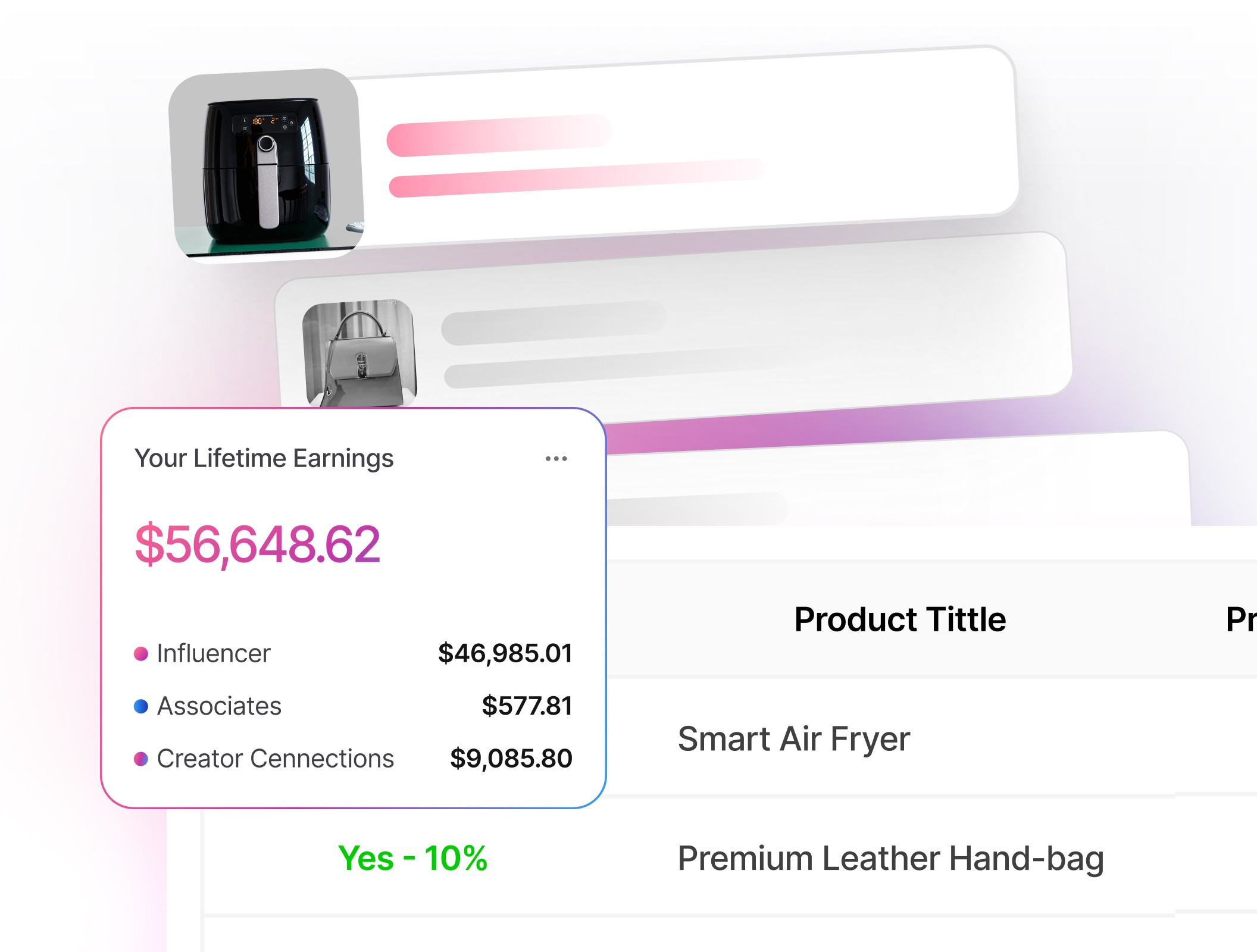
If you use Amazon Influencer, our Earnings and Profits Dashboard can bring your earnings, items sold, product performance, and return on investment into one view. You can use those insights to identify videos that may benefit from a stronger title, updated thumbnail, or follow-up review.
Compliance: Disclosures You Cannot Skip
The FTC’s endorsement rules apply on both platforms. When you have a material connection to a brand or earn commission on sales, make a clear and conspicuous disclosure within the content itself.
Platform disclosure toggles help, but they aren't always enough on their own. Use simple language viewers will not miss, repeat during long videos and live streams, and align with the latest endorsement guides and platform policies.
Examples
These examples show how a creator might split product content between YouTube and Amazon without publishing the same video in the same format on both platforms.
Niche Tech Reviewer
A camera channel publishes a 12-minute tutorial on color profiles. In the video, the creator tags cameras, lenses, and SD cards via YouTube Shopping, earning a generous affiliate commission from a pro photo retailer.
They also film 2-minute videos for each SD card and upload them to Amazon, which later appear on several product detail pages. YouTube builds demand for pricier gear. Amazon videos capture last‑mile conversions for accessories.
Home Organization Creator
A home organizer posts weekly Shorts with quick pantry upgrades. On YouTube, they tag bins and labels from participating retailers with solid commission rates. They also create quick Amazon videos showing assembly, fit, and durability for the exact bins sold on Amazon.
The Shorts drive awareness and browsing, while Amazon clips answer purchase questions like size and sturdiness. Earnings arrive via AdSense for the YouTube sales and via Associates for Amazon sales.
Actionable Steps / Checklist
Use these steps to build a manageable workflow, test each program, and compare results before investing more time in either one.
Map your content: Review your five strongest product-focused videos. Mark each one as discovery content, comparison content, or purchase-decision content.
Confirm eligibility: Check whether your eligible social account qualifies for Amazon Influencer and whether your YouTube channel has access to Shopping. Review each platform’s current content, tagging, and disclosure rules before publishing.
Build a core library: Begin with products you already own and understand well. Create focused clips that show the product in use, answer one or two buyer questions, and explain any meaningful limitations.
Tag smart on YouTube: Add product tags where you actually discuss the item. Use timestamps so tags appear at the right moment.
Prioritize high-signal offers: In YouTube Studio, sort by commission rate and relevance. On Amazon, focus on categories where your audience already buys.
Disclose clearly: Add spoken and on‑screen disclosures in videos and live streams. Repeat during long content.
Review and iterate monthly: Compare clicks, orders, and earnings from YouTube Studio and Associates Central. Double down on formats and products that convert.

Glossary
Clear definitions of platform-specific terminology transform confusing jargon into intuitive, everyday operational concepts.
Amazon Influencer Page: Your personalized Amazon storefront where you curate products and post videos.
Onsite Commission Income: Commission an approved influencer may earn when Amazon surfaces eligible content on qualifying Amazon shopping placements.
Attribution Window: The time span after a click during which a purchase still earns commission.
Product Tag: A tappable in‑video element on YouTube that links to a product offer.
YPP (YouTube Partner Program): YouTube’s monetization program, participation in which may be required for access to certain Shopping features.
Bounty Event: A fixed‑fee action in Amazon’s schedule, such as a paid membership sign-up.
Commission Income Statement: Amazon’s official rate table and rules for Associates earnings.
FAQ
Q: Can I use both programs at the same time? A: YouTube Shopping and Amazon Influencer are separate programs, so eligible creators may use both. YouTube can introduce and explain products, while Amazon content can assist shoppers who are already comparing options.
Q: Do I need a big following to join Amazon Influencer? A: You don't need to meet a publicly stated universal follower minimum. Amazon reviews factors such as your eligible social account, content quality, engagement, activity, and overall social presence.
Q: Does YouTube Shopping support Amazon products? A: YouTube Shopping product tags are limited to products and sellers supported by YouTube’s current integrations. When an Amazon product isn't eligible for a Shopping tag, an approved Amazon Associate may still use a properly disclosed Special Link in an eligible video description, subject to both platforms’ rules.
Q: Which pays more, Amazon or YouTube Shopping? A: Payment depends on category and audience. Amazon has fixed category rates. YouTube rates vary by retailer. Check live rates in YouTube Studio and Amazon’s Commission Income Statement.
Q: How fast do I get paid? A: Amazon generally pays about 60 days after the end of the earning month, subject to its payment rules and thresholds. YouTube Shopping commissions are paid through AdSense after the participating merchant validates the purchase and the applicable return period closes.
Final Thoughts
You don't need to commit permanently to one program. Start with the platform that best matches your eligibility, audience, and content style, then test the other after you have built a repeatable workflow.
YouTube Shopping can connect educational videos with participating retailers, while Amazon Influencer can reach shoppers already comparing products on Amazon. Review your results regularly because commission rates, merchant participation, eligibility requirements, and platform policies can change.
If Amazon becomes a meaningful part of your strategy, Viral Vue can support your product research, storefront analysis, placement tracking, content organization, and earnings review. You still decide which products and formats fit your audience, while the platform helps reduce the manual work behind those decisions.


Stop Guessing What to Post Next
Join TikTok Affiliates turning views into consistent commissions.