Amazon Affiliate vs Target Affiliate: Which Program Fits Your Site In 2026
Compare Amazon Affiliate vs Target Affiliate to explore commissions, requirements, product selection, and which program best fits your strategy.

If you earn from product reviews or deal roundups, Amazon Associates and Target Partners are probably on your shortlist. While both give publishers access to familiar retail brands and large product catalogs, their attribution rules, product strengths, and promotional tools differ.
This guide compares the two programs so you can choose links that fit your US audience, content format, product category, and monetization goals. You will see where Amazon’s scale wins, where Target’s 7‑day cookie helps, and how to stay compliant as rules evolve.
TL;DR
Amazon generally uses a 24-hour session. An item added to the cart during that session may still qualify if the customer buys it before the cart expires, which generally occurs within 89 additional days.
Target Partners currently advertises a 7-day cookie window and may credit multiple qualifying orders placed during that period, subject to its current terms and exclusions.
Commission rates for both vary by category and change often. Treat public rate cards as snapshots, not promises.
Some publishers use both programs and select links according to product availability, current pricing, audience intent, and their own conversion data.
Amazon Affiliate vs Target Affiliate Programs
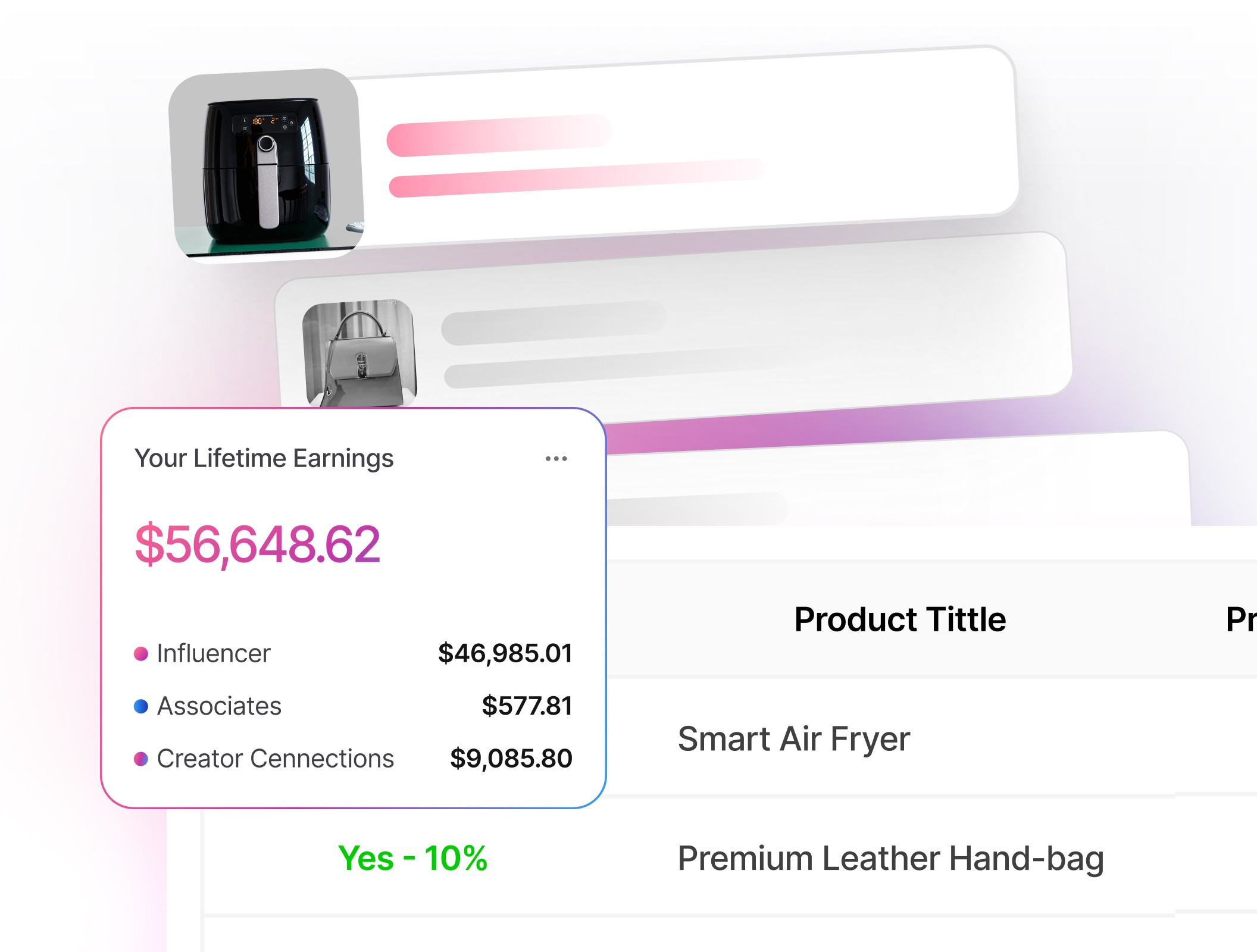
Understanding how each program tracks purchases helps you avoid lost attribution and choose the better retailer for each piece of content. If you use Amazon Associates, Viral Vue can help you research products, generate deep links, organize campaigns, and review Amazon earnings data in one digital workspace.
Amazon Associates at a Glance
Amazon Associates is Amazon’s in‑house affiliate program. You create “Special Links” that contain your tag and point to product pages, lists, or storefront content. When a reader clicks and buys during a tracked window, you earn a percentage of the qualifying revenue.
The rules governing tracking, rates, and placement are outlined in the Operating Agreement and Program Policies. Review these documents before publishing, as Amazon may revise its rates, permitted placements, and program requirements.
Target Partners at a Glance
Target Partners is Target’s affiliate program, with participation, commissions, and tracking governed by the program’s current network offer and terms. If you're approved for Target Partners, you can direct readers to eligible product and category pages, as well as curated promotions, using your affiliate links.
Target currently describes a 7-day cookie window and states that multiple qualifying orders may be credited during that period. However, this is still subject to exclusions and the terms of the active offer.
Cookie Windows and Attribution
A cookie or attribution window is the period during which a qualifying purchase may be credited after someone clicks your affiliate link. Because Amazon and Target use different attribution models, understanding how each one works can help you choose the right retailer for different types of content.
For Amazon Associates:
Uses a session model that begins when someone clicks your Special Link.
The session ends when 24 hours pass, the customer places an order, or they click another Associate's link.
If an eligible item is added to the cart during that session, it may still qualify if checkout occurs before the cart expires, generally within up to 89 additional days.
For Target Partners:
Currently advertises a 7-day cookie window.
If someone clicks your Target affiliate link and places a qualifying order within that period, you may earn commission under the current offer's terms and exclusions.
Target's FAQ also states that multiple qualifying orders placed during the 7-day window may be credited, not just the first.
Amazon's shorter session may work well for content that encourages immediate purchases. On the other hand, Target's longer attribution window may benefit products that shoppers research before buying.
If Amazon is part of your strategy, you can use our product research and deep-linking tools to find products and create trackable Amazon destinations more efficiently.
Commissions, Catalog, and Conversion
Rates for both programs vary by category and are subject to change. Amazon publishes rates in its Commission Income Statement appendix, whereas Target defines rates per offer in its network. Because these details move, build your plan around durable factors:
Catalog and availability: Amazon generally offers greater marketplace breadth, including many third-party and niche products. Target is often a practical option for mainstream home goods, apparel, children’s products, essentials, and seasonal merchandise.
Pricing and promos: Target promotions and Target Circle offers may influence purchase decisions. Meanwhile, Amazon offers a broad selection, Subscribe & Save on eligible products, and major promotional events.
Conversion friction: Amazon’s familiar checkout experience may reduce friction for some US shoppers. In contrast, Target may appeal to readers who value its store network, pickup options, and established presence in household retail.
Compare each retailer’s available reports by product category, traffic source, conversion rate, and earnings per click rather than relying only on advertised commission rates. Our Profits Dashboard can help you evaluate Amazon earnings, revenue, items sold, and product performance.

Why Viral Vue Is an Advantage for Amazon Affiliates
Many publishers participate in both Amazon Associates and Target Partners, but Amazon often requires significantly more day-to-day management. With millions of products, constantly changing listings, and multiple ways to monetize through Associates and the Amazon Influencer Program, researching products and organizing campaigns can quickly become time-consuming.
Viral Vue is built specifically for Amazon creators, helping you streamline tasks that aren't available through Target's affiliate program. Instead of manually tracking products, links, and performance across multiple tools, you can manage your Amazon workflow in one place.
If Amazon is part of your affiliate strategy, Viral Vue can help you:
Research products using Viral Score, estimated sales, historical performance, and creator competition.
Generate Amazon deep links more efficiently.
Organize products into Buckets for articles, videos, seasonal campaigns, or future opportunities.
Monitor Amazon earnings and product performance from a single dashboard.
Manage Amazon Influencer features like Storefront opportunities and Creator Connections alongside your affiliate workflow.
If you promote products from both retailers, Target can remain part of your monetization strategy while Viral Vue helps simplify the side of your business that typically requires the most research and organization.
Compliance and Disclosure Rules
Affiliate disclosure isn't optional. The FTC’s 2023 updates to the Endorsement Guides stress clear and conspicuous disclosures where the endorsement appears. Amazon also requires Associates to clearly display the statement, “As an Amazon Associate, I earn from qualifying purchases,” as required by its current program policies.
Place the disclosure before or near the affiliate recommendation so readers are likely to notice it. Don't rely solely on a footer, a terms page, or a disclosure that requires additional clicks.
Link placement rules also evolve. Under Amazon’s current policies, certain Special Links may be used in opted-in email, SMS, and direct-message communications when all Amazon requirements and applicable US marketing laws are followed. Always confirm Target’s current terms for email and other channels, since networks can differ.
Side-by-Side Network Comparison: Amazon Affiliate vs Target Affiliate
Use this comparison to evaluate how each program’s attribution rules, catalog, commissions, and link placement policies align with your content strategy.
Factor | Amazon Associates | Target Partners | Best For |
Cookie window | Generally a 24-hour session; eligible items added during that session may qualify if purchased before the cart expires | Currently advertises a 7-day window; multiple qualifying orders may be credited, subject to terms | Fast‑moving purchases vs. browse‑and‑return behavior |
Catalog breadth | Extremely broad, including long‑tail SKUs | Focused on Target’s retail catalog, including home, essentials, apparel, children’s products, and seasonal goods | Niche accessories vs. curated mainstream goods |
Rates | Vary by category; see current Commission Income Statement | Vary by offer and category in vendor network | When exact rates are close, pick by conversion data |
Link rules | Detailed placement rules and required Associate disclosure; review current terms for off-site messaging | Program T&Cs apply; cookie window per offer. | Publishers comparing channel restrictions, audience intent, and content formats |
Examples
The following examples show how you might use Amazon and Target links differently depending on your niche, audience behavior, and product selection.
Home Decor Blog, Seasonal Content
A home decor blogger publishes “Fall Mantel Ideas” with shoppable mood boards. Readers may save ideas, compare products over several days, and return when a seasonal promotion begins. The 7‑day cookie helps capture those staggered orders, especially with Target’s weekly sales on frames, candles, and faux greenery.
The blogger still includes Amazon links for specialty items that Target doesn't stock. As a result, the publisher could test Target links for widely available decor and Amazon links for niche accessories, then adjust placement using actual earnings and conversion reports.
Tech Reviewer, Accessories and Add‑Ons
A YouTube reviewer covers a new tablet and recommends a list of must‑have accessories. Viewers often click and add the tablet case, screen protector, and stylus to cart immediately while watching.
Amazon’s 24‑hour session plus cart‑carryover rule captures delayed checkouts for those specific SKUs. The creator includes a price‑check link to Target for the tablet itself if Target is running a gift card promo, but keeps Amazon as the primary destination for hard‑to‑find third‑party accessories.
Actionable Steps / Checklist
Use this checklist to make your affiliate links easier to manage, measure, and update.
Map buying intent by category: Identify which products your audience purchases quickly and which require more research. Test Amazon for immediate-purchase content and Target for products with longer consideration periods.
Verify current rules: Skim Amazon’s Operating Agreement and Policies, and Target’s FAQ and T&Cs before launch. Note cookie windows and any channel restrictions.
Standardize disclosures: Display Amazon’s required Associate statement and place a plain-language affiliate disclosure before or close to recommendations and links.
Build your multi-retailer links around performance: Place the better-converting retailer first when your reports support that choice. Offer another retailer when it provides better availability, pricing, or a relevant promotion.
Test email responsibly: If you run a newsletter, include Special Links only for opted‑in audiences and comply with spam and text laws. Track click‑to‑order lag.
Review reports regularly: Compare the metrics each program makes available, including earnings per click, conversion rate, order revenue, and average order value, when provided.
Keep creatives current: Update seasonal collections, swap sold‑out items, and refresh top posts around big events to maximize each program’s strengths.

Glossary
Learn these definitions when reviewing affiliate terms, creating links, and comparing your campaign reports.
Cookie window: The time after a click during which a purchase can be credited to your link.
Session: Amazon’s tracking period that typically lasts 24 hours or ends sooner if an order is placed or another affiliate link is clicked.
Add-to-cart carryover: Amazon’s rule that an eligible item added during the session may qualify for purchase before the cart expires.
EPC (earnings per click): Average commission earned per click; helpful for comparing programs.
AOV (average order value): The average total per order; often higher for bundles or seasonal hauls.
Special Link: Amazon’s tracked URL format that includes your Associate tag.
Disclosure: A clear statement that you may earn from links; required by the FTC and Amazon.
Offer: Target’s vendor‑defined commission terms, including cookie duration and exclusions.
FAQ
Q: Can I join both programs?
A: You can join both Amazon and Target's affiliate programs provided you qualify for and follow the terms of each program. You can select retailers according to price, availability, product fit, and your own performance reports.
Q: Can I put affiliate links in my newsletter?
A: Amazon currently permits certain affiliate links in qualifying opted-in communications, subject to its policies and applicable laws. Check both programs’ current channel rules before sending any campaign.
Q: Do I earn on everything a reader buys?
A: You earn only on eligible products and transactions under each program’s current rules, attribution window, exclusions, and commission schedule.
Q: Which pays more?
A: Payment depends on various factors, so it helps to compare EPC and conversion by category. Sometimes Target’s 7‑day window outperforms. In some cases, Amazon’s catalog and cart carryover win.
Final Thoughts
You don't necessarily have to choose one program for every recommendation. Test each retailer where it fits the product, audience, and content format.
Lead with the merchant that best matches your reader’s intent for that product, keep disclosures tight and visible, and revisit your data every month. The mix that respects how your audience shops is the mix that pays.
If Amazon is a major part of your affiliate strategy, you can use Viral Vue to research products, create deep links, organize campaigns, review storefront insights, and monitor Amazon earnings in one browser-based workflow.




Stop Guessing What to Post Next
Join TikTok Affiliates turning views into consistent commissions.